2020 Olympics Men’s Marathon Date to Be Changed

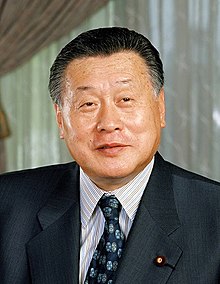
Tokyo 2020 Olympic organizing committee head Yoshiro Mori attended meetings in Sapporo Nov. 7 with Hokkaido governor Naomichi Suzuki and Sapporo mayor Katsuhiro Akimoto to ask them for their support and cooperation in holding the Olympic marathons and race walk events in Sapporo after the IOC dictated that this happen. Indicating for the first time that neither the city nor prefecture would be asked to pay for the events, Mori said, “We want to make sure that there is no burden placed upon Hokkaido.”

At a meeting about the road events’ forced move to Sapporo between the IOC, national government, Tokyo Metropolitan Government and Tokyo Olympics organizing committee on Nov. 1, it was agreed that the Tokyo Metropolitan Government would not shoulder the costs of the IOC’s decree. The IOC had said that Hokkaido and Sapporo should share in paying for the cost of the events’ relocation, but in the meeting with Mori on Nov. 7 the Governor and Mayor reiterated their position that, “It is the basic responsibility of the Organizing Committee to pay for this.” Mori indicated that the situation is still fluid, answering that, “At the moment I can’t say where the money will come from.”

With regard to the men’s marathon, scheduled to be held on the final day of the Olympics, Aug. 9, as per tradition, Mori said, “There will be significant changes to the schedule.” Mori said that given the need to budget time for antidoping after the men’s marathon, the IOC’s plan to transport athletes back to Tokyo in time for the closing ceremonies was unrealistic. “The current plan is impossible,” he said. “We need to change the event’s schedule.” The IAAF is currently planning to reduce the road event schedule from five to three days as a cost-saving measure. “We hope to get this straightened out as soon as we can,” said Mori.

On Nov. 8 organizing committee secretary general Toshiro Muto will visit Sapporo and examine Odori Park, currently viewed as the most likely starting and finishing point for the marathon. He will hold working-level meeting with prefectural and city government officials.

source article:
newstf.x-day.tokyo/?p=15333
translated and edited by Brett Larner

Buy Me A Coffee

Comments

Most-Read This Week

Everything You Need to Know About the 2026 Hakone Ekiden

The Hakone Ekiden is the world's biggest road race, 2 days of road relay action with Japan's 20 best university teams racing 10 half marathon-scale legs from central Tokyo to the mountains east of Mount Fuji and back. The level just keeps going higher and higher , hitting the point this year where there are teams with 10-runner averages of 13:33.10 for 5000 m, 27:55.98 for 10000 m, and 1:01:20 for the half marathon. It's never been better, and with great weather in the forecast it's safe to say this could be one of the best races in Hakone's 102-year history, especially on Day One. If you've seen it then you know NTV's live broadcast is the best sports broadcast in the world, with the pre-race show kicking off at 7:00 a.m. Japan time on the 2nd and 3rd and the race starting at 8:00 a.m. sharp. If you've got a VPN you should be able to watch it on TVer starting at 7:50 a.m. on the 2nd , and again at 7:50 a.m. on the 3rd . There's even a 2-hour high...

Long Time Coming - Akira Akasaki and Haruka Onodera's Road to the 2022 United Airlines NYC Half

Back in pre-pandemic days Akira Akasaki and Haruka Onodera  were still in college, Akasaki at Takushoku University and Onodera at Teikyo University . At the 2019 Ageo City Half Marathon they frontran most of the race together, dead set on finishing in the top two Japanese collegiate spots to win invitations to the 2020 United Airlines NYC Half. For Akasaki it had already been a year and a half wait. Inspired by Kenta Murayama 's 1:00:57 5th place in finish in New York in 2017 and Kei Katanishi 's 7th-place in 2018, Akasaki went for it his junior year in his debut at the 2018 Ageo Half . "Coming up to 10 km I was in the lead pack and feeling good, so I knew I had a shot at going to New York and got pretty excited," he said. But right after the 10 km turnaround point he tripped and fell, and by the time he was back up the lead group was out of range. He finished 20th in 1:03:07, over a minute and a half behind top Japanese university man Ken Nakayama . "I was f...

My Training for 1:00:44

Hi, I'm Ayumu Kobayashi . Today I'm going to write about this year's National Corporate Half Marathon and the training I did for it. I hope other runners will find it even a little bit helpful. At the Corporate Half on Feb. 13 I was 10th in 1:00:44. My goal had been to run 61 minutes, so I hit that target. My Training Menu In January I ran a total of 681 km. Key workouts: Jan. 11: 1000 m x 5 at 2:50/km Jan. 12: 22.5 km Jan. 15: 9 km variable pace Jan. 17: 25 km Jan. 24: 1000 m x 8 at 2:52/km Jan. 27: 1 km + 4 km + 2 km Jan. 30: 16 km at 3:18/km avg. In January I was tired from the New Year Ekiden and had some knee pain after it, so I just jogged for 10 days until I started doing workouts again on the 11th. That's why I only ran 681 km for the month. But even on the jog days I was aware that I had the Corporate Half coming up, so I was doing around 30 km. It's pretty meat and potatoes, but I think it was really important. February (training for the 10 days before...