
Kusu Runs Steeplechase World-Leading Time, Yabuta and Yoshimura Break National Records, Tanaka Just Misses Fukushi's NR - Kitami and Liege Highlights
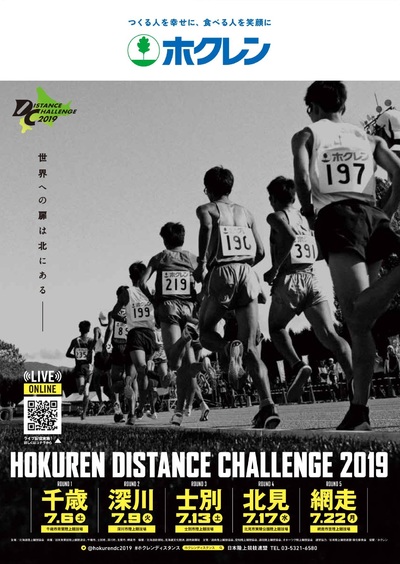
Wednesday afternoon and evening saw the fourth meet in this year's five-part Hokuren Distance Challenge series, this time in the town of Kitami. The program included the little-raced 2000 m steeplechase as a tuneup for Monday's series-closing Abashiri meet, and in both the women's and men's races the national records went down. A top collegiate steepler while at Kyoto Sangyo University, Yui Yabuta (Otsuka Seiyaku) ran 6:27.74 to break the women's record. In the men's race 1500 m specialist Yasunari Kusu (Ami AC) surprised many by breaking the Japanese national record with a world-leading 5:31.82 despite little experience in the steeple.

The women's 3000 m in Kitami was more explicitly set up as a national record attempt, with four of the ten fastest Japanese women ever over the distance lined up to gun for the great Kayoko Fukushi's 8:44.40 record dating back to 2002. From the gun it was out at NR pace, with pacers Hellen Ekalale (Toyota Jidoshokki) and Melissa Duncan (Shiseido) leading what quickly boiled down to a Japanese trio of 5000 m national champion Tomoka Kimura (Shiseido), 10000 m national champ Rina Nabeshima (Japan Post) and 2018 World U20 Championships 3000 m gold medalist Nozomi Tanaka (Toyota Jidoshokki TC). Tanaka was dissatisfied with Duncan's pacing and moved ahead of her, Kimura hanging back and Nabeshima starting to fade near 2000 m.

With 800 m to Tanaka went ahead of Ekalale and opened a sizable lead, looking like the national record was hers for sure. But over the last lap she ran out of gas, dragging herself down the home straight as Ekalale closed behind her. Tanaka crossed the finish line 1st in 8:48.38, missing the national record by just under 4 seconds but moving up to all-time Japanese #3, with Ekalale next in 8:49.19 and Kimura getting under 9 minutes in 8:57.04 for 3rd. Post-race Tanaka said, "It's kind of embarrassing, but I lost count of the laps and thought I was on the last lap when I kicked. I didn't have anything left after that." Despite the mistake Tanaka came right up to Fukushi's record, and there's no question she looked like she's capable of getting it whenever she's in the right race.

A few hours later in Belgium a large contingent of 26 Japanese athletes competed at the Meeting International d'Athletisme in Liege. Less than 3 weeks after breaking the U20 national record to win the National Championships women's 3000 m steeplechase, Reimi Yoshimura (Daito Bunka Univ.) did it again with a new U20 NR of 9:49.30 for 8th. Only the fifth Japanese woman to ever break 9:50 in the steeplechase, Yoshimura moved up to all-time #4 on the Japanese list. 800 m and 1500 m double national champion Ran Urabe (Nike Tokyo TC) came back from a cold after her pair of national titles to take 3rd in the 1500 m in 4:19.30, disappointed with her time and the 8-second gap to the leading pair but using the race as a step toward her next race Saturday in Heusden-Zolder.

On the men's side, Ryoma Aoki (Hosei Univ.) joined the ranks of what has been an exciting last month in the Japanese men's steeplechase, running a PB 8:32.51 to move up to all-time #6 among Japanese collegiate men, just seconds from qualifying for this fall's Doha World Championships. One of the stars of 2019 Hakone Ekiden champion Tokai University's roster, Kazuto Iizawa also had a good day, winning the men's 1500 m in 3:48.44.

© 2019 Brett Larner, all rights reserved

Buy Me A Coffee

Comments

Most-Read This Week

Everything You Need to Know About the 2026 Hakone Ekiden

The Hakone Ekiden is the world's biggest road race, 2 days of road relay action with Japan's 20 best university teams racing 10 half marathon-scale legs from central Tokyo to the mountains east of Mount Fuji and back. The level just keeps going higher and higher , hitting the point this year where there are teams with 10-runner averages of 13:33.10 for 5000 m, 27:55.98 for 10000 m, and 1:01:20 for the half marathon. It's never been better, and with great weather in the forecast it's safe to say this could be one of the best races in Hakone's 102-year history, especially on Day One. If you've seen it then you know NTV's live broadcast is the best sports broadcast in the world, with the pre-race show kicking off at 7:00 a.m. Japan time on the 2nd and 3rd and the race starting at 8:00 a.m. sharp. If you've got a VPN you should be able to watch it on TVer starting at 7:50 a.m. on the 2nd , and again at 7:50 a.m. on the 3rd . There's even a 2-hour high...

Long Time Coming - Akira Akasaki and Haruka Onodera's Road to the 2022 United Airlines NYC Half

Back in pre-pandemic days Akira Akasaki and Haruka Onodera  were still in college, Akasaki at Takushoku University and Onodera at Teikyo University . At the 2019 Ageo City Half Marathon they frontran most of the race together, dead set on finishing in the top two Japanese collegiate spots to win invitations to the 2020 United Airlines NYC Half. For Akasaki it had already been a year and a half wait. Inspired by Kenta Murayama 's 1:00:57 5th place in finish in New York in 2017 and Kei Katanishi 's 7th-place in 2018, Akasaki went for it his junior year in his debut at the 2018 Ageo Half . "Coming up to 10 km I was in the lead pack and feeling good, so I knew I had a shot at going to New York and got pretty excited," he said. But right after the 10 km turnaround point he tripped and fell, and by the time he was back up the lead group was out of range. He finished 20th in 1:03:07, over a minute and a half behind top Japanese university man Ken Nakayama . "I was f...

My Training for 1:00:44

Hi, I'm Ayumu Kobayashi . Today I'm going to write about this year's National Corporate Half Marathon and the training I did for it. I hope other runners will find it even a little bit helpful. At the Corporate Half on Feb. 13 I was 10th in 1:00:44. My goal had been to run 61 minutes, so I hit that target. My Training Menu In January I ran a total of 681 km. Key workouts: Jan. 11: 1000 m x 5 at 2:50/km Jan. 12: 22.5 km Jan. 15: 9 km variable pace Jan. 17: 25 km Jan. 24: 1000 m x 8 at 2:52/km Jan. 27: 1 km + 4 km + 2 km Jan. 30: 16 km at 3:18/km avg. In January I was tired from the New Year Ekiden and had some knee pain after it, so I just jogged for 10 days until I started doing workouts again on the 11th. That's why I only ran 681 km for the month. But even on the jog days I was aware that I had the Corporate Half coming up, so I was doing around 30 km. It's pretty meat and potatoes, but I think it was really important. February (training for the 10 days before...