First Japanese Boston Marathon Winner Shigeki Tanaka: "Heiwadai and Fukuoka Were My Starting Point"


The Fukuoka International Marathon held its 75th and final running on Dec. 5. One legendary runner began his career at historic Heiwaidai Field, Fukuoka's start and finish point, and went on to become the first Japanese marathoner to stand at the top of the world. He is Shigeki Tanaka, 90, winner of the 1951 Boston Marathon. Tanaka was deeply moved as he watched the last edition of the race on TV from his home in Utsunomiya. 

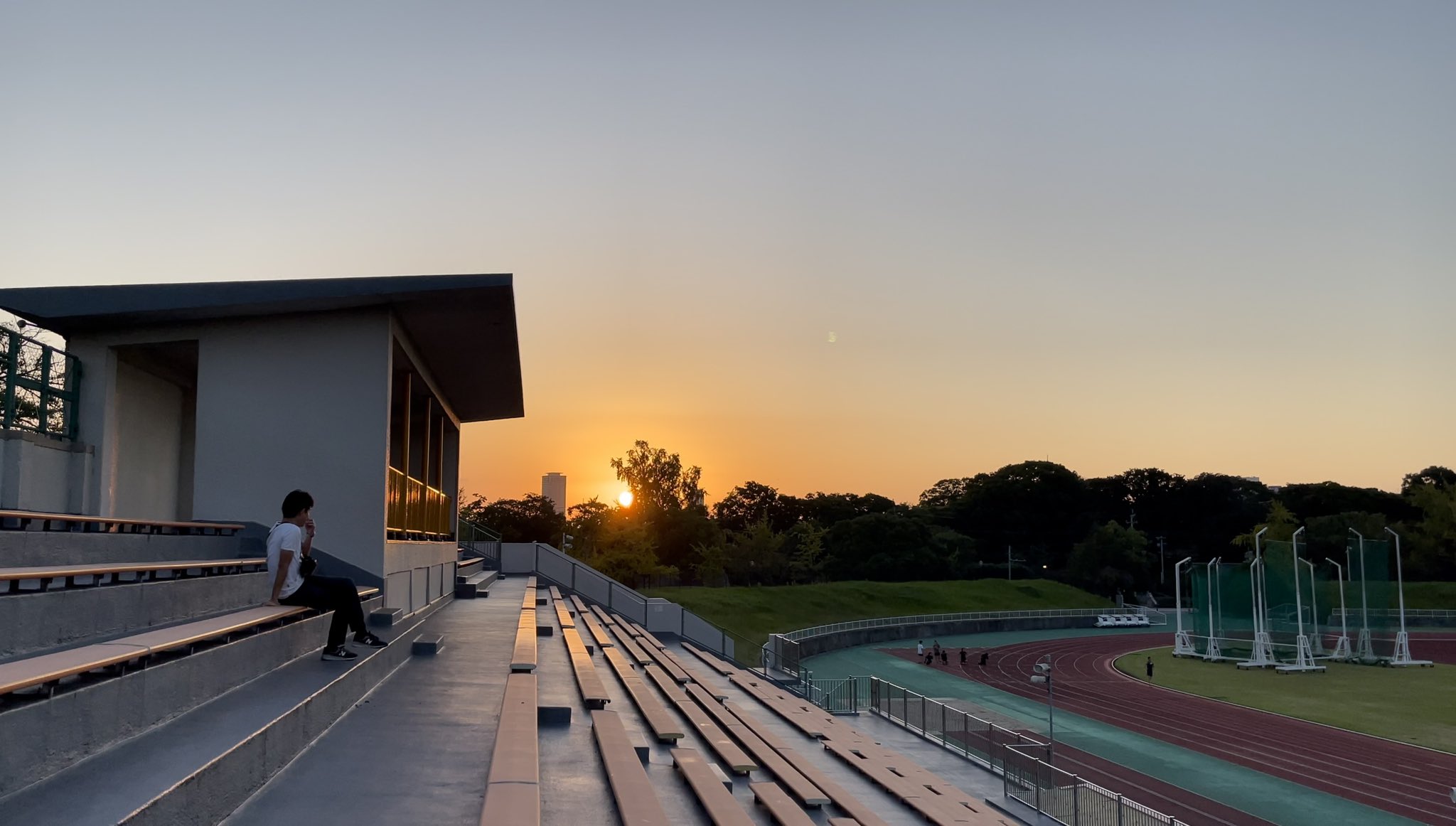
In 1950 Heita Okabe, who laid the foundation for modern Japanese sports, proposed the creation of an Olympic development program to Shizo Kanakuri, the father of Japanese marathoning. Tanaka was one of the program's original members. In an era of shortages in the basic necessities of life, Tanaka packed a backpack with rice and a blanket and traveled from Hiroshima to Fukuoka. The program's first session took place at Heiwadai Field and neighboring Ohori Park. Under Okabe and Kanakuri's direction he and the other participants gained strength doing interval training, which had not been a part of Japanese methodology up to that point.

Tanaka ran the 4th Asahi Marathon, the original incarnation of the Fukuoka International Marathon, in Hiroshima in 1950. He finished 10th despite still being in high school. "That gave me confidence," he said. With that confidence he won the Boston Marathon the next year. He later ran the Asahi Marathon's 9th and 10th editions in Fukuoka and Nagoya, and after his retirement he became chairman of the National Marathon Federation founded by Kanakuri.

Before the pandemic began, Tanaka went to the Fukuoka International Marathon every year, paying his respects to the statue of Okabe at the entrance to Heiwadai Field and holding a memorial for Kanakuri to which he would invite people from the Japanese athletics world. "Heiwadai Field and Fukuoka's marathon were my starting point and are my personal treasures," he said. "It is incredibly sad that the race is to be no more. But I hope that Heiwadai Field will continue to be home to runners who will go on to success around the world." Watching  on TV as Japan's marathoners circled that historic track one last time, tears rolled down Tanaka's cheeks.


source article:
translated by Brett Larner

Tanaka photo c/o Digital Commonwealth, © 1951 Leslie Jones, all rights reserved
other photos © 2021 Brett Larner, all rights reserved

Buy Me A Coffee

Comments

Most-Read This Week

Federation Tells World Championships Marathoner Horibata To Go On Diet

http://hochi.yomiuri.co.jp/sports/etc/news/20110307-OHT1T00258.htm translated by Brett Larner Having made the 2011 World Championships marathon team by running a PB of 2:09:25 to come in 3rd overall and as the top Japanese finisher at the Mar. 6 Lake Biwa Mainichi Marathon, Hiroyuki Horibata (24, Team Asahi Kasei), talked to the media at Osaka Airport on Mar. 7. Following Sunday's race Rikuren director Keisuke Sawaki , 67, told Horibata, "Let's cut things down a bit until the World Championships," directing him to go on a diet. The 189 cm Horibata weighs 72 kg [~6'3", 160 lbs]. When he joined Team Asahi Kasei in 2005 at age 18 he weighed 65 kg, and this weight is still generally listed on his profile at races and in the media. "For some reason it never changes," he said with a grin. His coach Takeshi Soh , 58, commented, "If he was hungrier for glory his world would change completely," slapping the 'heavyweight division runner...

Nagoya Asian Games Test Event Canceled After Insulation Falls From Venue Ceiling

A section of insulation material fell from the ceiling of Nagoya Kinjo Futo Arena, the official venue for squash competition at September's Nagoya Asian Games. There were no injuries, but the city suspended use of the arena until its safety could be guaranteed, resulting in the cancelation of the Asian Games squash test event which was scheduled to have begun on May 14. It is not yet clear whether the arena will be usable for the Asian Games as planned. According to city officials, arena staff found that the insulation material had fallen onto a work walkway 13 m above the ground on the night of May 11. The fallen material was 3.6 m long, 50 cm wide and 2.5 km thick, and was found to be waterlogged. The cause of the accident is unknown, but it is possible that it was caused by rainwater leaking in from the roof. The same insulation material is installed across the entire ceiling, and the city plans to check for the extent of the possible flooding. Asked whether the arena will be re...

Everything You Need to Know About the 2026 Hakone Ekiden

The Hakone Ekiden is the world's biggest road race, 2 days of road relay action with Japan's 20 best university teams racing 10 half marathon-scale legs from central Tokyo to the mountains east of Mount Fuji and back. The level just keeps going higher and higher , hitting the point this year where there are teams with 10-runner averages of 13:33.10 for 5000 m, 27:55.98 for 10000 m, and 1:01:20 for the half marathon. It's never been better, and with great weather in the forecast it's safe to say this could be one of the best races in Hakone's 102-year history, especially on Day One. If you've seen it then you know NTV's live broadcast is the best sports broadcast in the world, with the pre-race show kicking off at 7:00 a.m. Japan time on the 2nd and 3rd and the race starting at 8:00 a.m. sharp. If you've got a VPN you should be able to watch it on TVer starting at 7:50 a.m. on the 2nd , and again at 7:50 a.m. on the 3rd . There's even a 2-hour high...