Okayama and Yamaguchi Gold and Silver, JPN Men and Women Team Gold and Bronze at IAU 100 km World Championships

Ruel soon broke away to open a lead of around 2 minutes by halfway. Behind him, a South African trio caught up to the Japanese group, prompting Yamaguchi to take off in pursuit of the lead. On every 7.5 km lap he closed around 30 seconds on Ruel, finally coming within 20 seconds at around 70 km. But just as he was about to take the lead, Yamaguchi ran into trouble, at exactly the time that Okayama drove by hard to move into 1st instead of him.
Running the 100 km distance for only the second time, by 77.5 km he had almost a minute lead over Ruel and never looked back. Okayama came home in 6:12:10, a PB by over 4 1/2 minutes and less than 3 minutes off Kazami's 6:09:14 WR. After his 6:16:44 debut this spring at the Shibanuma 100 km Okayama said that his goal is to break the WR at Lake Saroma next year, and with this performance behind him that definitely looks in range.
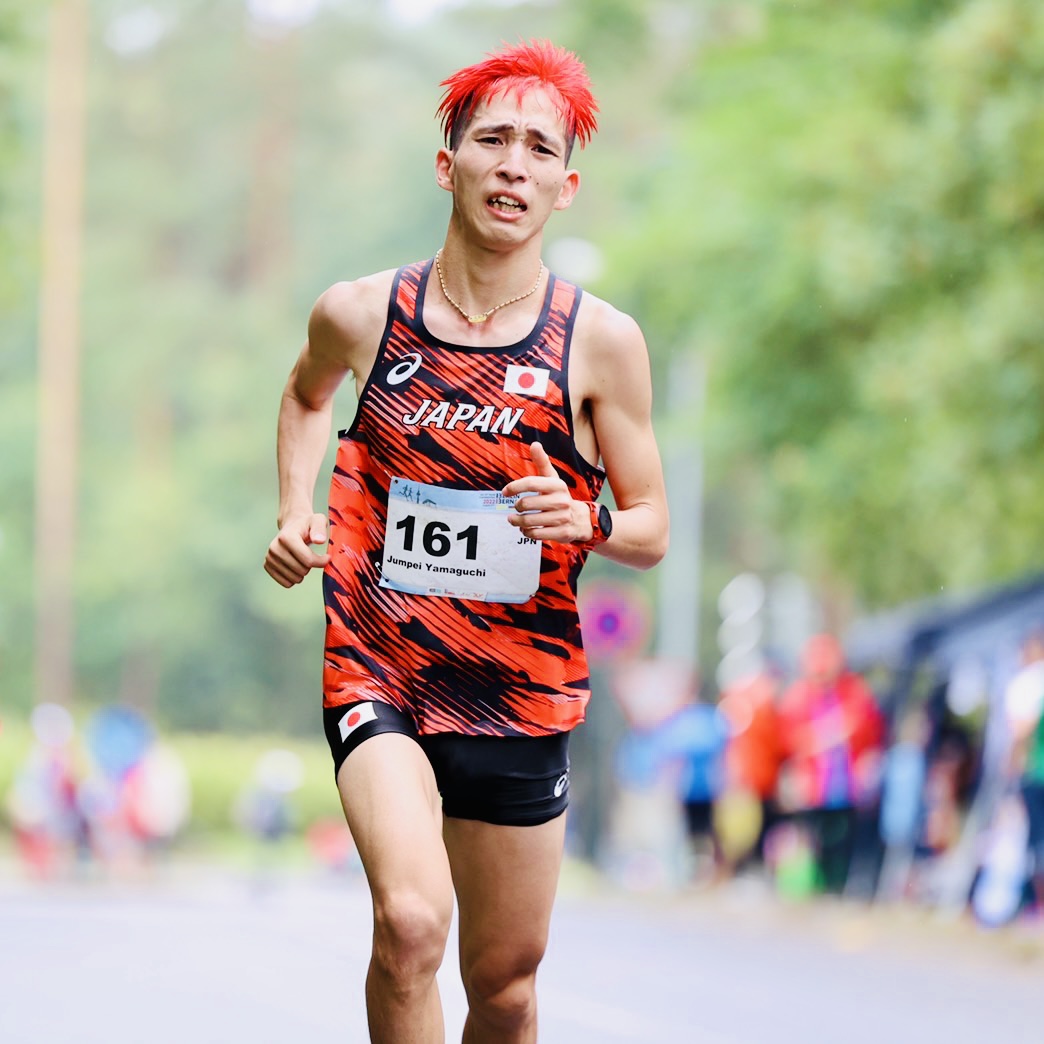
Kazami held on to 6th behind Hakansson and Ruel in 6:21:43. That was enough to land Japan the team gold medal and add another line to the resume of one of the great ultra runners of our time. Kazami was the only man in the top 10 not to run a PB, a sign of how high the level really was in this historic race.

In the women's race France's Camille Chaigneau and France's Noora Honkala went out hard, top-ranked Japanese woman Miho Nakata and Lithuanian Gitana Akmanavičiūtė following at a distance. By 20 km Nakata and Akmanavičiūtė had come up within 5 seconds of the leaders, but a surge from Chaigneau made sure a lead group never came together.
As Chaigneau built what looked like a dominant lead Nakata spent the rest of the race hovering around 6th. Teammate Mai Fujisawa came up to 7th and looked like she might join Nakata, but over the second half the dynamic changed dramatically. Another French runner, Floriane Hot, took the lead from Chaigneau, pushing on to take gold in 7:04:03. American Courtney Olsen moved into the bronze position behind Chaigneau but was caught by Irish runner Caitriona Jennings, who looked strong enough to have a shot at Chaigneau and silver. Chaigneau just held her off, taking 2nd in 7:06:32, Jennings landing bronze in 7:07:16.
Nakata was 6th in 7:19:12, a PB by over 8 1/2 minutes and moving up to 4th-fastest Japanese woman ever. The veteran Fujisawa fell to 10th in 7:32:22, but that was only 29 seconds off her lifetime best. Like Kazami, Fujisawa was the athlete in the top 10 not to run a PB. Mikiko Ota was the 3rd Japanese woman home at 12th in 7:35:25, just 1:07 off her best. 4th team member Aiko Kanematsu was a DNF late in the race, but with only the top 3 scoring the Japanese women took team bronze behind gold medalists U.S.A. and silver medalists France. As in the men's race, the number of PBs up top made this one of the top women's 100 km races in history.
Taken all together it was one of Japan's best-ever team performances at the 100 km World Championships, especially notable for the PBs and near-misses. Show up to an international competition and run like you're there to do your absolute best, unafraid when everyone else goes out hard. Japan's ultra national team could teach a thing or two to most of the country's distance runners in the shorter events.
IAU 100 km World Championships
Berlin, Germany, 27 Aug. 2022
Men - Individual
1. Haruki Okayama (Japan) - 6:12:10 - PB
2. Jumpei Yamaguchi (Japan) - 6:17:19 - PB
3. Piet Wiersma (Netherlands) - 6:18:47 - PB
4. Sebastian Conrad (Norway) - 6:19:01 - PB
5. Guillaume Ruel (France) - 6:19:51 - PB
6. Nao Kazami (Japan) - 6:21:43
7. Elov Olsson (Sweden) - 6:30:14 - PB
8. Manel Deli Andujar (Spain) - 6:30:24 - PB
9. Gareth King (Great Britain) - 6:32:05 - PB
10. Alexander Bock (Germany) - 6:34:40 - PB
Men - Team
1. Japan - 18:51:12
2. France - 19:55:10
3. South Africa - 20:05:58
4. Germany - 20:08:17
5. Great Britian - 20:27:07
Women - Individual
1. Floriane Hot (France) - 7:04:03 - PB
2. Camile Chaigneau (France) - 7:06:32 - PB
3. Caitriona Jennings (Ireland) - 7:07:16 - PB
4. Courtney Olsen (U.S.A.) - 7:15:29 - PB
5. Satu Lipiainen (Finland) - 7:15:35 - PB
6. Miho Nakata (Japan) - 7:19:12 - PB
7. Anna Kacius (U.S.A.) - 7:24:41 - PB
8. Silvia Luna (Italy) - 7:29:01 - PB
9. Federica Moroni (Italy) - 7:31:45 - PB
10. Mai Fujisawa (Japan) - 7:32:22
Women - Team
1. U.S.A. - 22:14:46
2. France - 22:16:46
3. Japan - 22:26:59
4. Italy - 23:03:37
5. Great Britian - 23:19:06
photos © 2022 Tarzan Aqzawa / Eldoreso, all rights reserved
text © 2022 Brett Larner, all rights reserved

Comments