http://www.asahi.com/articles/ASH915QR9H91UTIL032.html
translated by Brett Larner
photo via Wikipedia
Three luminaries gave Asahi their views on Tuesday's withdrawal of the 2020 Tokyo Olympics logo designed by Kenjiro Sano and officially released in late July.
 Mitsuru Yaku, manga artist
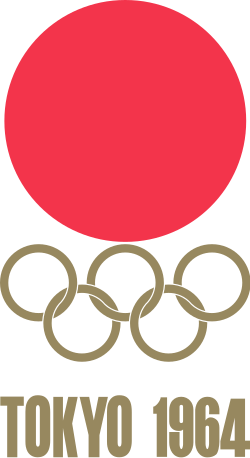
With regard to the reason for the withdrawal, the organizing committee has repeatedly said, "We have been unable to obtain the understanding of the public," but with no independent review they have simply left this issue to the court of public opinion. Going ahead now with no determination of where responsibility lies for, say, the selection process the first time, means that even if there are public contributions this time there will be some suspicion somewhere, and that raises the risk of stepping on the same landmine again. In the first place, we already have the 1964 Tokyo Olympics logo, so why do we need to re-design a new one? It has clarity and majesty. No design could surpass it. As a two-time Olympic host city its use would show veneration for our ancestors. Or is it no longer important that we pass on that philosophy?
Yuko Arimori, 1992 and 1996 Olympic marathon medalist; president, Special Olympics Japan
This is a very disappointing start to the buildup toward the Olympics. It is humiliating that ever since the New National Stadium problem, an endless stream of unthinkable things has happened. Redoing the National Stadium plans and Olympic logo from zero is already costing a lot of money. There is no transparency at all to how money is being used or how the organizing committee is operating. With the general public eating those costs, are they really going to line up and cheer the athletes and enjoy themselves at the Olympics? Both money and effort should be used in a meaningful way that will promote community and children's sports. I hope that we can still regain confidence and put on an Olympics that everybody can support.
Takayuki Fujimoto, Associate Professor of Design Theory, Toyo University
Mr. Sano should certainly have withdrawn the logo at a much earlier stage. In the background of the problem becoming this large was not just the issue of whether there was imitation or plagiarism in his logo design, but the tremendous public scrutiny and suspicion of all his other previous work that it created. Dealing with the Olympics necessitates absolute spotlessness. With one after another suspicious cases pointed out online public opinion quickly came to become, "We do not want a dirty logo," which I believe is a sign of general anger over the unending series of problems including the New National Stadium issue.
translated by Brett Larner
photo via Wikipedia
Three luminaries gave Asahi their views on Tuesday's withdrawal of the 2020 Tokyo Olympics logo designed by Kenjiro Sano and officially released in late July.
With regard to the reason for the withdrawal, the organizing committee has repeatedly said, "We have been unable to obtain the understanding of the public," but with no independent review they have simply left this issue to the court of public opinion. Going ahead now with no determination of where responsibility lies for, say, the selection process the first time, means that even if there are public contributions this time there will be some suspicion somewhere, and that raises the risk of stepping on the same landmine again. In the first place, we already have the 1964 Tokyo Olympics logo, so why do we need to re-design a new one? It has clarity and majesty. No design could surpass it. As a two-time Olympic host city its use would show veneration for our ancestors. Or is it no longer important that we pass on that philosophy?
Yuko Arimori, 1992 and 1996 Olympic marathon medalist; president, Special Olympics Japan
This is a very disappointing start to the buildup toward the Olympics. It is humiliating that ever since the New National Stadium problem, an endless stream of unthinkable things has happened. Redoing the National Stadium plans and Olympic logo from zero is already costing a lot of money. There is no transparency at all to how money is being used or how the organizing committee is operating. With the general public eating those costs, are they really going to line up and cheer the athletes and enjoy themselves at the Olympics? Both money and effort should be used in a meaningful way that will promote community and children's sports. I hope that we can still regain confidence and put on an Olympics that everybody can support.
Takayuki Fujimoto, Associate Professor of Design Theory, Toyo University
Mr. Sano should certainly have withdrawn the logo at a much earlier stage. In the background of the problem becoming this large was not just the issue of whether there was imitation or plagiarism in his logo design, but the tremendous public scrutiny and suspicion of all his other previous work that it created. Dealing with the Olympics necessitates absolute spotlessness. With one after another suspicious cases pointed out online public opinion quickly came to become, "We do not want a dirty logo," which I believe is a sign of general anger over the unending series of problems including the New National Stadium issue.
Comments